Concrete Retaining Walls San Diego CA built to hold their ground
Concrete Retaining Walls San Diego CA are reinforced, poured-in-place structures that hold back soil, stop erosion, and reclaim usable yard space on sloped lots. We design and build them for homeowners from La Jolla bluffs to Rancho Bernardo hillsides, handling drainage, rebar, and permits in one job. If your slope is sliding, your fence is leaning, or you want a flat patio where a hill sits now, we can price it this week.
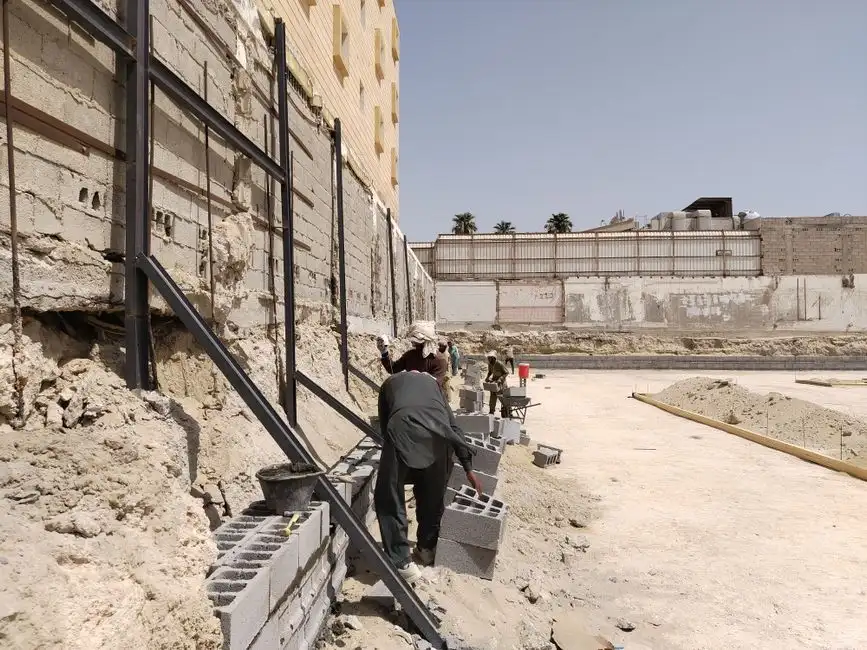
Service overview
What Concrete Retaining Walls San Diego CA actually involve
A concrete retaining wall is a reinforced structure that resists the lateral pressure of soil behind it. We build ours from poured concrete, formed on site, with rebar cages tied to Simpson Strong-Tie connectors and set on a footing buried below the frost line, which in San Diego is shallow but still matters for footing depth. A concrete mixer or pump delivers the mix, then we screed, bull float, and finish the face. Weep holes and gravel backfill handle drainage, and expansion joint material separates long runs so the wall moves with the ground instead of cracking. San Diego County homeowners call us for three reasons: a hillside yard that sheds soil every rainy season, a driveway cut into a slope that keeps slumping, or a patio project that needs level ground. Coastal lots in Point Loma and Ocean Beach deal with salt air and sandy, fast-draining soil. Inland lots in Poway and Escondido sit on clay that swells when wet. Both need real engineering, not a stack of blocks. We size the wall, the footing, and the drainage to the soil on your lot.
! Problems we solve
Hillside soil sliding after winter rains
Losing topsoil every season undermines fences, patios, and foundations, and it can send mud into storm drains or a neighbor's yard. Left alone, a sliding slope can cost thousands in regrading and drainage work.
Old timber or block wall cracking and leaning
A leaning wall is a structural warning. Once a wall starts to move, patching the face does nothing, and the wall can fail completely after a heavy storm, dropping soil onto whatever sits below it.
Yard too steep to use for a patio or lawn
A sloped yard is dead space. You cannot put furniture on it, kids cannot play on it, and any patio you try to build will settle or crack because the ground underneath is not stable.
Scope of work
What is included in our retaining wall construction San Diego projects
Every retaining wall project we quote includes the structural work, the drainage, and the cleanup. Add-ons like decorative finishes, lighting, or matching steps are priced separately so you can see exactly what each option costs. Here is what you get as standard on a poured concrete wall.
-
01
Site evaluation and layout
We measure the slope, check soil conditions, and mark the wall line before any digging starts. You see the layout on the ground and approve it before we mobilize equipment. This step catches problems like utility conflicts or property line issues early.
-
02
Footing and rebar cage
We excavate the footing trench, compact the base, and tie a rebar cage at the engineered spacing. Footing depth and width are sized to your wall height and soil type, not pulled from a generic chart. This is the part of the job that determines whether the wall lasts.
-
03
Poured wall and finish
We build forms, place the concrete with a mixer or pump, and vibrate the mix to remove air pockets. Then we screed, bull float, and finish the face. Standard finish is a broom texture; smooth, stamped, and exposed aggregate are available as upgrades.
-
04
Drainage and backfill
Gravel backfill, filter fabric, and weep holes go in behind the wall before we backfill and compact. This is what keeps water pressure from pushing the wall over. We restore the surrounding grade and leave the site clean, with all debris hauled off.
Why homeowners invest in a poured wall
A retaining wall is one of the few home improvements that pays you back in usable square footage, structural protection, and lower long-term repair bills. Here is what a properly built wall delivers.
Request my estimateTools and methods we use on every wall
Concrete mixer and pump
We use a mixer for smaller pours and a concrete pump for tight-access lots where a truck cannot reach. The pump keeps the pour continuous, which means fewer cold joints and a stronger wall.
Rebar cutter and Simpson Strong-Tie connectors
Rebar cages are cut and tied on site with Simpson Strong-Tie hardware at the engineered spacing. Proper tying keeps the steel in place during the pour so it ends up where the engineer designed it.
Bull float, screed, and power trowel
After the pour, we screed to grade, bull float to bring up the cream, and use a power trowel where a smooth finish is specified. These tools determine how flat and clean the finished face looks.
Laser level and concrete saw
A laser level keeps the wall line and top elevation accurate across long runs. A concrete saw cuts clean control and expansion joints at the right spacing so the wall cracks where we want it to, not randomly.
Local execution
San Diego is a mild climate, but it is not an easy one for retaining walls. Coastal neighborhoods like Point Loma and Ocean Beach deal with salt air that attacks concrete surfaces and steel, so we spec concrete sealer and pay attention to rebar cover. Inland areas like Poway, Escondido, and El Cajon sit on expansive clay that swells when wet and shrinks when dry, which puts cyclical pressure on a wall and can crack a footing that was sized for stable soil. We over-excavate footings on clay lots to reach stable ground and widen the footing where the soil report calls for it. Winter rain is the other factor. San Diego gets most of its rain between December and March, and a wall without proper drainage will fail during that window. We build drainage into every wall, and we schedule pours around storms so the concrete cures properly. If you need retaining wall construction San Diego CA open now, call us and we will tell you honestly whether the weather allows a pour this week or whether we should schedule for a dry stretch.
How retaining wall construction San Diego CA runs in our climate
- • La Jolla
- • Rancho Bernardo
- • North Park
- • Chula Vista
Recent work
Available 24/7 for retaining wall emergencies in San Diego
When a wall fails, we answer the phone
A retaining wall that has started to lean or crack after a storm is not a wait-until-Monday problem. We keep a phone line open 24/7 for San Diego County homeowners who need an urgent assessment, and we can usually have someone on site within 24 hours for a wall that is actively moving. Our crews run two to four people per job, and our trucks carry rebar, form material, and drainage supplies so we can stabilize a failing wall quickly and schedule the permanent repair. If you are searching for retaining wall construction San Diego CA open now, call us and we will tell you what we can do today. For non-urgent work, we schedule evaluations within a week and typically have a written estimate back to you within 48 hours.
How our retaining wall construction in San Diego runs
On-site evaluation
We walk your lot, measure the slope, check soil type, and look at how water moves through the property. You get a written scope and a price range the same week. Most evaluations take 30 to 45 minutes, and we bring a laser level to confirm elevations on the spot.
Design and engineering
For walls over 4 feet, we bring in a licensed engineer to size the footing and rebar schedule. You see the plan before we dig. Smaller garden walls skip this step and go straight to permitting or straight to build, depending on height and location.
Permits and utility locate
We pull the city or county permit and call 811 to mark gas, water, and electrical lines. Permit turnaround in San Diego typically runs 2 to 4 weeks. We handle the paperwork so you are not chasing the building department.
What retaining wall construction costs in San Diego
Concrete retaining wall pricing in San Diego depends on wall height, length, soil conditions, access, and whether the wall needs engineering and a permit. In 2026, most residential walls run $45 to $90 per square foot of wall face, and a typical 30-foot by 4-foot wall lands between $5,400 and $10,800. That range includes the footing, rebar, drainage, and standard finish. Engineered walls over 4 feet, tight-access lots, and decorative finishes push the number higher. We give you a written scope and a fixed price before we start, so there are no surprises mid-job.
Wall height and length
Height drives footing size and rebar schedule, and length drives total concrete volume. A 6-foot wall costs more per square foot than a 3-foot wall because the footing is wider and the rebar cage is heavier. We price by the square foot of wall face so you can compare quotes apples to apples.
Soil and site conditions
Expansive clay, soft fill, or a slope that needs over-excavation all add cost because we have to dig deeper and pour a wider footing. A site with good, stable soil is cheaper to build on. We check soil conditions during the on-site evaluation and price accordingly.
Permits, engineering, and access
Walls over 4 feet usually need a permit and engineered plans, which adds $800 to $2,500 depending on the jurisdiction and complexity. Tight-access lots that require a concrete pump add $500 to $1,200. Decorative finishes like stamped or exposed aggregate add cost on top of the standard broom finish.
Licensed, insured, and accountable
Retaining wall questions we hear every week
How much does concrete retaining wall cost in San Diego CA?
Most residential concrete retaining walls in San Diego run $45 to $90 per square foot of wall face in 2026, so a 30-foot-long, 4-foot-tall wall typically lands between $5,400 and $10,800. Engineered walls over 4 feet, tight-access lots, and decorative finishes push the number up. Permits, engineering, and drainage add cost but are not optional on a wall that has to hold.
How long does retaining wall construction take in San Diego?
A straightforward 3-foot garden wall takes 3 to 5 working days from dig to backfill. A permitted, engineered wall over 4 feet usually runs 2 to 3 weeks on site, plus 2 to 4 weeks for the permit. Rain can add days, since we do not pour in standing water or during heavy storms. We give you a schedule before we start.
Who is the best retaining wall contractor in San Diego California?
The right contractor is the one who sizes the footing to your soil, handles the permit, and shows you the drainage plan before the pour. Ask for a CSLB license, proof of insurance, and photos of walls they built three or more years ago that are still straight. We are happy to walk you through past jobs in your neighborhood.
Do I need a permit for retaining wall in San Diego?
In most of San Diego, a wall 4 feet or taller, measured from the bottom of the footing to the top of the wall, needs a building permit and often engineered plans. Walls under 4 feet usually do not, but rules vary by jurisdiction and by how close the wall sits to a property line. We check the requirement for your address before we quote.
Related services
Concrete Driveway Installation
A retaining wall often goes in at the same time as a new driveway cut into a slope. We pour both in one mobilization, so the wall holds the grade and the driveway sits on solid, compacted base instead of fill that settles.
Concrete Patio Installation
Many San Diego patios need a low retaining wall to create a flat pad on a sloped yard. We build the wall first, backfill and compact, then pour the patio on top so the surface stays level and drains away from the house.
Get your Concrete Retaining Walls San Diego CA estimate this week
We are a licensed, insured San Diego retaining wall contractor with seven years of poured wall work behind us. Call today and we will schedule an on-site evaluation, measure your slope, and give you a written price. Most estimates go out within 48 hours.