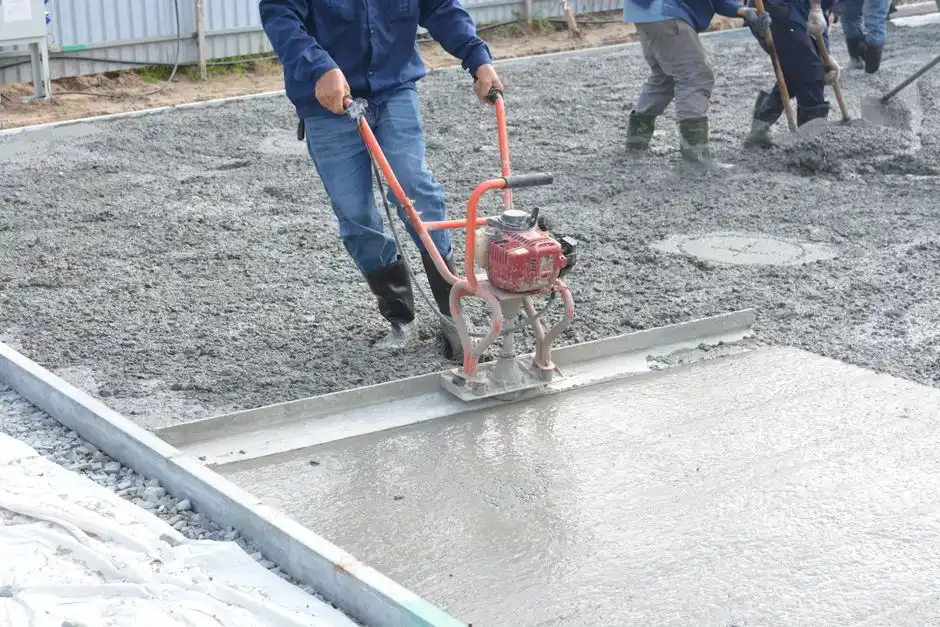
The best time of year to pour concrete in San Diego is late October through early April, when daytime highs stay between 60°F and 80°F and overnight lows rarely dip below 50°F. That window gives you slow, even curing without the rapid moisture loss that cracks slabs poured in August. The rest of this post breaks down the ideal temperature range, what changes in summer and winter, how long curing actually takes here, and the mistakes we see most often on local jobs.
Why San Diego's Climate Changes the Answer
San Diego's coastal climate is mild enough that you can pour concrete almost any month of the year - but "can" and "should" are different questions. The best time of year to pour concrete San Diego homeowners ask about is really about managing two variables: temperature and moisture loss. Concrete cures through a chemical reaction called hydration, and that reaction runs fastest when the concrete stays between 50°F and 80°F. Above 90°F, the mix sets too fast and you lose workability. Below 40°F, hydration nearly stops and the concrete may never reach full strength.
San Diego sits in a sweet spot. Our average annual temperature is about 65°F, and we get roughly 10 to 12 inches of rain a year, almost all of it between November and March. That means most of the year is workable - but the shoulder seasons are where the best pours happen. If you are planning a Concrete Driveway Installation San Diego CA, timing the pour around our marine layer and afternoon sun makes the difference between a slab that lasts 30 years and one that starts spider-cracking in three.
The Ideal Pouring Window: Late October Through Early April
Late October through early April is the best weather to pour concrete in San Diego CA because daytime temperatures sit in the 60s and 70s, humidity is higher, and the sun is less intense. Concrete placed in this window cures slowly and evenly, which is exactly what you want. We schedule most of our larger flatwork - driveways, patios, foundations - between November and March.
Here is what that window looks like month by month:
- November-December: Daytime highs 65-70°F, overnight lows 50-55°F. Excellent curing conditions. Watch for the first winter rain events.
- January-February: Cooler, with highs near 65°F and lows around 48-52°F. Still well above the 40°F threshold. Rain is the main scheduling risk.
- March-early April: Warming back into the low 70s. Longer days help finishers get a clean broom or trowel finish before dark.
One practical note: rain does not ruin a pour if you are ready for it. We cover fresh slabs with plastic sheeting and re-trowel the edges once the weather passes. What ruins a pour is rain hitting the surface before it has set - that washes out the cement paste and leaves a weak, sandy top layer.
Pouring Concrete in Summer in San Diego
Pouring concrete in summer San Diego is doable, but it requires earlier start times, ice or chilled water in the mix, and more attention to curing. July through September, inland areas like El Cajon, Santee, and Poway regularly hit 90-100°F, while the coast stays in the mid-70s. That 25-degree spread means a pour in La Jolla and a pour in Ramona on the same day are two different jobs.
When we pour in summer, we usually start at 5:30 or 6:00 a.m. so the concrete is placed and finished before the worst heat. We also use evaporation retardants and start wet-curing or curing-compound application within an hour of finishing. Without those steps, a 4-inch slab in 95°F sun can lose moisture faster than it hydrates, and you get plastic shrinkage cracks within the first 24 hours.
If your project is a small patio or walkway, summer is fine. If it is a structural slab or a large driveway, we push those to fall. Homeowners across Concrete Patio Installation San Diego CA projects often ask us to wait until October for exactly this reason.
Pouring Concrete in Winter in San Diego CA
Pouring concrete in winter San Diego CA is generally safe because our overnight lows rarely drop below 45°F near the coast. The concrete code requires a minimum concrete temperature of 50°F during placement and 40°F during the first 48 hours of curing. San Diego meets those numbers almost every night of the year, which is why winter pours are common here.
The real winter risk is rain, not cold. Between December and March, we get most of our annual rainfall, and a surprise storm can hit a fresh slab. We track the forecast hour by hour before a winter pour and keep plastic sheeting, sandbags, and a pump on site. If rain is likely, we reschedule - it is cheaper to wait two days than to replace a slab.
Inland valleys like Alpine and Ramona can see overnight temps in the high 30s in January. On those nights we use insulating blankets or heated enclosures to keep the concrete above 40°F until it reaches about 500 psi, usually within 48 hours. If you are planning a Concrete Foundation Construction San Diego CA project in winter, this is the kind of detail that separates a foundation that passes inspection from one that does not.
What Temperature Is Too Hot to Pour Concrete in San Diego?
Above 95°F ambient temperature, concrete placement in San Diego becomes risky without special measures. The American Concrete Institute recommends that fresh concrete not exceed 95°F, and at ambient temperatures above 90°F, you need chilled water, ice, or a retarding admixture to keep the mix workable long enough to finish.
Here is how we handle heat in San Diego:
- Start early. We aim to have the truck on site by 5:30 a.m. and finishing done by 9:00 a.m.
- Cool the mix. Ice or chilled water replaces part of the batch water, dropping the concrete temperature 10-15°F.
- Use retarders. A set-retarding admixture buys 30-60 extra minutes of workability.
- Cure immediately. Wet burlap, curing compound, or plastic sheeting goes on as soon as the surface is finished.
If a contractor tells you they can pour a 4-inch slab at 2:00 p.m. in August in Escondido with no special measures, find another contractor. The concrete will set before it can be properly finished, and you will see it in the surface within a year.
How Long Does Concrete Take to Cure in San Diego?
Concrete in San Diego reaches about 70% of its design strength in 7 days and full design strength in 28 days, but curing continues for years. The 28-day mark is the standard used for testing and structural acceptance. In our climate, the timeline looks like this:
- 24-48 hours: You can walk on the slab.
- 7 days: About 70% strength. Light vehicles can usually drive on a driveway.
- 28 days: Full design strength. Normal use is fine.
- 6-12 months: Surface hardness continues to increase.
Cooler months slow the early strength gain slightly but produce a denser, stronger surface over time. Hot months speed it up but increase the risk of shrinkage cracks. That trade-off is the core reason the best month to pour concrete San Diego projects is usually November, March, or April - mild enough for slow curing, dry enough to avoid rain delays.
If you are sealing or staining a slab, wait at least 28 days. Sealers trap moisture, and applying one too early traps that moisture inside the concrete, which causes cloudiness and adhesion failure. Our Concrete Sealing San Diego CA crew will not touch a slab until it has cured for a full month.
Common Mistakes We See on San Diego Concrete Pours
The most common mistake is pouring in the wrong part of the day, not the wrong month. We have seen more cracked slabs from a 2:00 p.m. August pour than from any winter job.
Other mistakes we fix regularly:
- No control joints. Concrete moves. Without joints every 8-10 feet, it cracks wherever it wants.
- Too much water in the mix. Adding water on site to make the concrete easier to finish weakens it by 15-20% per extra gallon per yard.
- Skipping curing. Letting a slab dry in the sun instead of keeping it moist for 7 days cuts surface strength significantly.
- Pouring on unprepared subgrade. Soft or uncompacted soil settles and cracks the slab from below.
- Ignoring the marine layer. Coastal fog can leave a slab too wet to finish, and impatient finishers overwork the surface, causing dusting later.
If you are dealing with any of these on an existing slab, our Concrete Repair & Restoration San Diego CA team can assess whether it needs patching, resurfacing, or full replacement.
When to Call a Professional
Call a professional when the pour involves more than about 2 cubic yards, when the slab is structural, or when the timing window is tight. A cubic yard of concrete weighs about 4,000 pounds, and once it is in the truck, you have roughly 90 minutes to place and finish it. That is not a job to learn on a Saturday.
We handle the mix design, the subgrade prep, the formwork, the pour, and the curing plan. If you are weighing a fall pour against waiting until spring, we will tell you honestly which one fits your project. San Diego Concrete Contractor has poured slabs across the county in every month of the year, and we know what each season demands.
Frequently Asked Questions
What is the best time of year to pour concrete in San Diego?
Late October through early April is the best window, with daytime temperatures between 60°F and 80°F. November, March, and April are the standout months. Summer pours are possible but require early starts and extra curing measures.
Can you pour concrete in winter in San Diego CA?
Yes. San Diego winter lows rarely drop below 45°F near the coast, well above the 40°F minimum for curing. The main risk is rain, not cold. We track the forecast and cover or reschedule fresh slabs when storms are coming.
What temperature is too hot to pour concrete in San Diego?
Above 95°F ambient temperature, placement becomes risky without chilled water, ice, or retarders. Inland San Diego areas hit 95-100°F in July through September, so we start those pours at dawn and cure immediately after finishing.
How long does concrete take to cure in San Diego?
Concrete reaches about 70% strength in 7 days and full design strength in 28 days. You can walk on it after 24-48 hours. Wait at least 28 days before sealing, staining, or heavy vehicle traffic.
Is it better to pour concrete in spring or fall in San Diego?
Both work well. Fall pours benefit from warm soil and mild air; spring pours benefit from longer days and drying conditions. We usually recommend whichever season gets your project done without rushing the cure.
Get Help with Concrete Contractor in San Diego
If you are ready to schedule a pour or just want to know whether your project fits this season, call us at +1 619-231-1616. We will walk your site, check the forecast, and give you a straight answer on timing and cost.